A DIAMOND CROWN OF A BIOGRAPHY
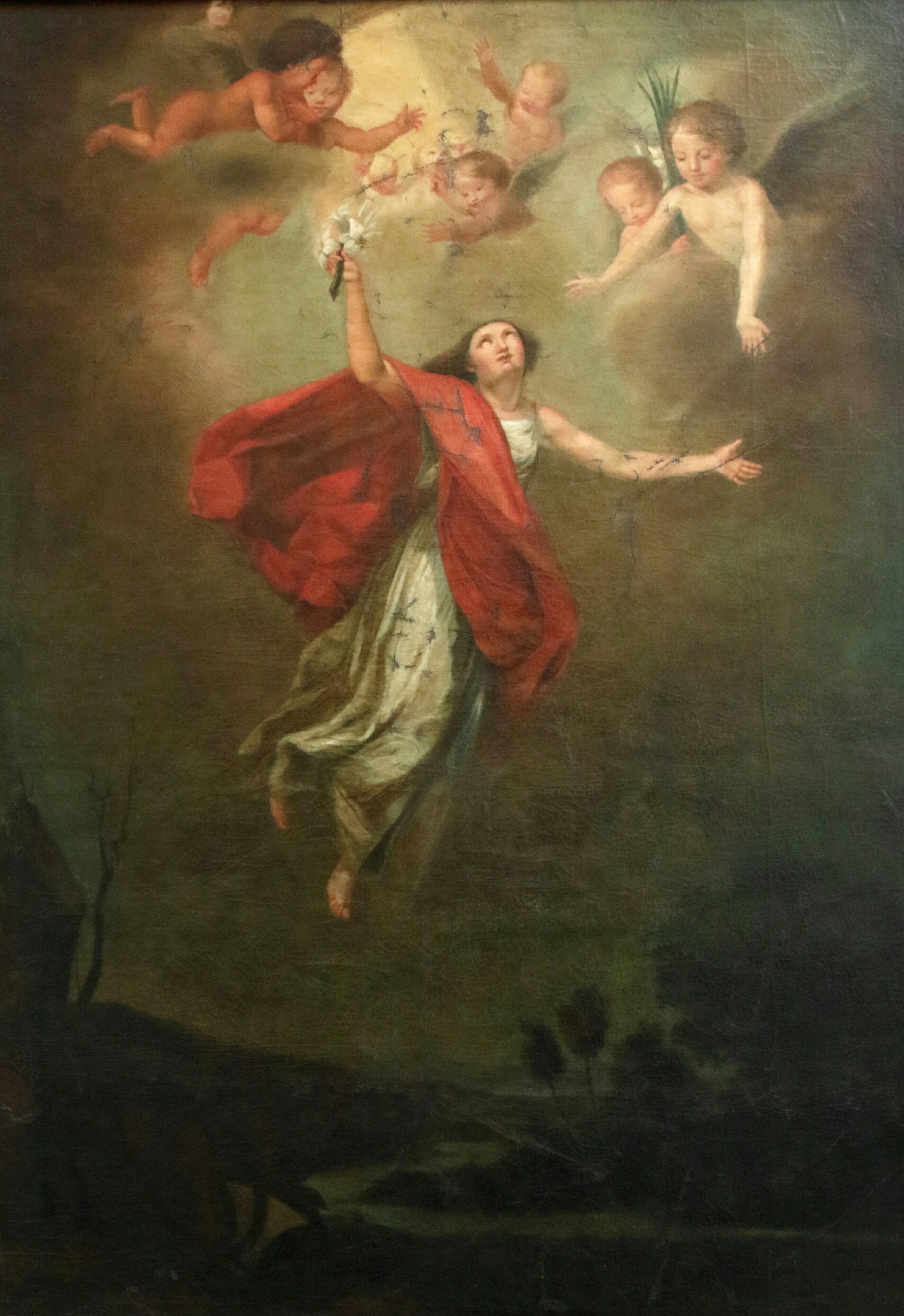
Here is my review of Cecily Hallack's Wonder Worker. You might consider doing same and reading and reviewing; it could help get this jewel into the hands of someone who really needs it.
This book is a glorious coronation. The brilliant author seeks to crown Philomena as the princess of your heart. In these pages, you'll learn who Philomena is and why she is so totally worthy of your devotion, because if you let her into your heart, she will be so totally and lovingly devoted to you.
She was born a Greek Princess to parents who had become Christians before her conception. When she was 11 she promised her virginity to Christ. At 13, she was taken to Rome so her parents could plead their nation's case against hostile threats. The Emperor, dastardly Diocletian fell madly in love with the exquisitely beautiful Philomena, or in lust with her, and wanted her for himself.
When she refused, he chopped off her head. Philomena could have been empress of the world, but she passed this up so she could honor her vow to her Spouse, and in turn He made her Princess of Heaven.
Philomena's remains, however, were discovered 1498 years later when fossors were clearing an ancient sand pit and found her shelf tomb in a remote tunnel. Her bones and a vial with her blood were found, later tested and found to be that of a 13 year old girl. The events that unfolded after Philomena was discovered proved this "underage girl" to be a wonder worker and Hallack does a masterful job of showing you are never too young to be a saint.
Philomena's remains, however, were discovered 1498 years later when fossors were clearing an ancient sand pit and found her shelf tomb in a remote tunnel. Her bones and a vial with her blood were found, later tested and found to be that of a 13 year old girl. The events that unfolded after Philomena was discovered proved this "underage girl" to be a wonder worker and Hallack does a masterful job of showing you are never too young to be a saint.
Hallack's gift for fine character portraits shines through when she brings to life the various key people who enshrined Philomena and made her accessible to the masses. A young priest with pluck, Don Franceso took pains to make sure her remains were taken the 140 miles from the Eternal City to his small parish, a boozy beachy town given to licentiousness, Mugnano.
Here Philomena started to manifest her power in spectacular fashion. A crudely made statue of her transformed - without any natural explanation - into a masterpiece, it's like Philomena, the chestnut haired beauty with heart-shaped face began inhabiting the effigy. Miracles small and big abounded. Not just in Southern Italy, but Philomena won the heart of a gaunt French priest, "the Cure of Ars", Jean-Baptiste Vianney who became one of her biggest champions.
Hallack splendidly showcases Philomena's most mighty miracles, including a baby raised from the dead. But also describes sudden healing from all sorts of ghastly maladies for which there was paltry medical intervention available at that time in the 1800s. Many recovered from blindness and also nasty conditions like gangrene.
Hallack also shows Philomena to be mischievous in her miracles. A child who was overly fond of bread and cheese was put at a remove from them, in an empty room, prayed to Philomena and was miraculously given a mini buffet of his favorite snack.
What I loved most is that Hallack captures Philomena's vivacity and effervescence. She answers her clients with such joy and fun! Philomena is presented as a rebellious teenage saint, the rebel with a cause, being the virgin bride of God who stood up to the Emperor so that she wouldn't fail Christ. At times, Philomena exasperated the Cure of Ars who wished her to convert souls to her Spouse before she interceded for their health to be miraculously restored.
Hallack also proudly demonstrates that Philomena intercedes for people's material needs, often showering her devotees in luxury. So hardened are my senses that I rarely cry. One account, however, brought me to tears. A destitute new mother was so strapped that she had no clothes for her little one, and the nurse had to give her scarf to the baby. Lo and behold, the mother prayed to Philomena and accidentally found a trunk with a luxurious layette. The baby looked like a royal and was christened Philomena.
Philomena is the patron saint of babies and youth, but I'd proffer her as the patron of people struggling to conceive and for new parents. We need to keep in mind that those who make a promise to call their baby after her are often swiftly rewarded with a little one growing in the womb, and Philomena's cause is furthered by these children who bear her name.
Like her heroine, Hallack needs to be rediscovered. Hallack, is to date the best biographer of Heaven's Princess, yet little of her life is common knowledge. She died at 40, in 1938 having written an impressive canon for one so young. Perhaps like her heroine, there has been a time when Hallack has been obscured and now is the time her works will become known, never were they more needed!
This is a masterpiece, and while it is usually hard to improve upon such, Dr. Keith Berube has achieved a feat in editing and forwarding this edition, becoming the ambassador for both Philomena and Hallack. Fascinating analysis has been added that lends credibility, especially for the contemporary reader. The vial containing Philomena's blood has been analyzed and this cherished vessel has been found to have been manufactured concurrent to the time Philomena gave as the date of her martyrdom. A scientific finding like this could not have been known at the time Hallack was writing.
So confident is Hallack in her subject that when she presents Philomena's extraordinary miracles she doesn't flinch from saying they are like fairy tales. Philomena seems so fantastically great she may present as too good to be true. There is a need to resist this doubt, and courageously ask Philomena's help, there is drama and delight in how she answers, but with Philomena there is never a dull moment.
Dr. Berube is a disciple of Philomena and she has entrusted him with a sacred task; he is like the fossors who found her remains; he is doing magnificent work to ensure the Princess is rediscovered by our generation; now. Dr. Berube is the nexus between Philomena and her followers who will be formed today, both coming from the youngest to the oldest, and Dr. Berube will share in the heavenly glory which Philomena enjoys and desires for all who come under the sparkle of her crown.
Even though I've contributed to research on Philomena by quoting Padre Pio as revealing she is the Princess of Heaven in my biography of him, I felt intimidated by Hallack's great faith and her ardent passion for her patroness. Such is Hallack's white hot zeal that it made me feel the chill in my own, and my lack of love.
Hallack splendidly showcases Philomena's most mighty miracles, including a baby raised from the dead. But also describes sudden healing from all sorts of ghastly maladies for which there was paltry medical intervention available at that time in the 1800s. Many recovered from blindness and also nasty conditions like gangrene.
Hallack also shows Philomena to be mischievous in her miracles. A child who was overly fond of bread and cheese was put at a remove from them, in an empty room, prayed to Philomena and was miraculously given a mini buffet of his favorite snack.
What I loved most is that Hallack captures Philomena's vivacity and effervescence. She answers her clients with such joy and fun! Philomena is presented as a rebellious teenage saint, the rebel with a cause, being the virgin bride of God who stood up to the Emperor so that she wouldn't fail Christ. At times, Philomena exasperated the Cure of Ars who wished her to convert souls to her Spouse before she interceded for their health to be miraculously restored.
Hallack also proudly demonstrates that Philomena intercedes for people's material needs, often showering her devotees in luxury. So hardened are my senses that I rarely cry. One account, however, brought me to tears. A destitute new mother was so strapped that she had no clothes for her little one, and the nurse had to give her scarf to the baby. Lo and behold, the mother prayed to Philomena and accidentally found a trunk with a luxurious layette. The baby looked like a royal and was christened Philomena.
Philomena is the patron saint of babies and youth, but I'd proffer her as the patron of people struggling to conceive and for new parents. We need to keep in mind that those who make a promise to call their baby after her are often swiftly rewarded with a little one growing in the womb, and Philomena's cause is furthered by these children who bear her name.
Like her heroine, Hallack needs to be rediscovered. Hallack, is to date the best biographer of Heaven's Princess, yet little of her life is common knowledge. She died at 40, in 1938 having written an impressive canon for one so young. Perhaps like her heroine, there has been a time when Hallack has been obscured and now is the time her works will become known, never were they more needed!
This is a masterpiece, and while it is usually hard to improve upon such, Dr. Keith Berube has achieved a feat in editing and forwarding this edition, becoming the ambassador for both Philomena and Hallack. Fascinating analysis has been added that lends credibility, especially for the contemporary reader. The vial containing Philomena's blood has been analyzed and this cherished vessel has been found to have been manufactured concurrent to the time Philomena gave as the date of her martyrdom. A scientific finding like this could not have been known at the time Hallack was writing.
So confident is Hallack in her subject that when she presents Philomena's extraordinary miracles she doesn't flinch from saying they are like fairy tales. Philomena seems so fantastically great she may present as too good to be true. There is a need to resist this doubt, and courageously ask Philomena's help, there is drama and delight in how she answers, but with Philomena there is never a dull moment.
Dr. Berube is a disciple of Philomena and she has entrusted him with a sacred task; he is like the fossors who found her remains; he is doing magnificent work to ensure the Princess is rediscovered by our generation; now. Dr. Berube is the nexus between Philomena and her followers who will be formed today, both coming from the youngest to the oldest, and Dr. Berube will share in the heavenly glory which Philomena enjoys and desires for all who come under the sparkle of her crown.
Even though I've contributed to research on Philomena by quoting Padre Pio as revealing she is the Princess of Heaven in my biography of him, I felt intimidated by Hallack's great faith and her ardent passion for her patroness. Such is Hallack's white hot zeal that it made me feel the chill in my own, and my lack of love.
I can only hope that by re-reading it, learning from example, employing St Philomena's help ever more and doing my utmost to make this masterpiece known that I can gain something of Hallack's reverence and awe. After all, when you experience the joy of Philomena's intercession, you are left calling her that seldomly deserved word: awesome.


Comments
Post a Comment